ERV vs HRV: Which Fresh-Air System Is Right for Your Home?
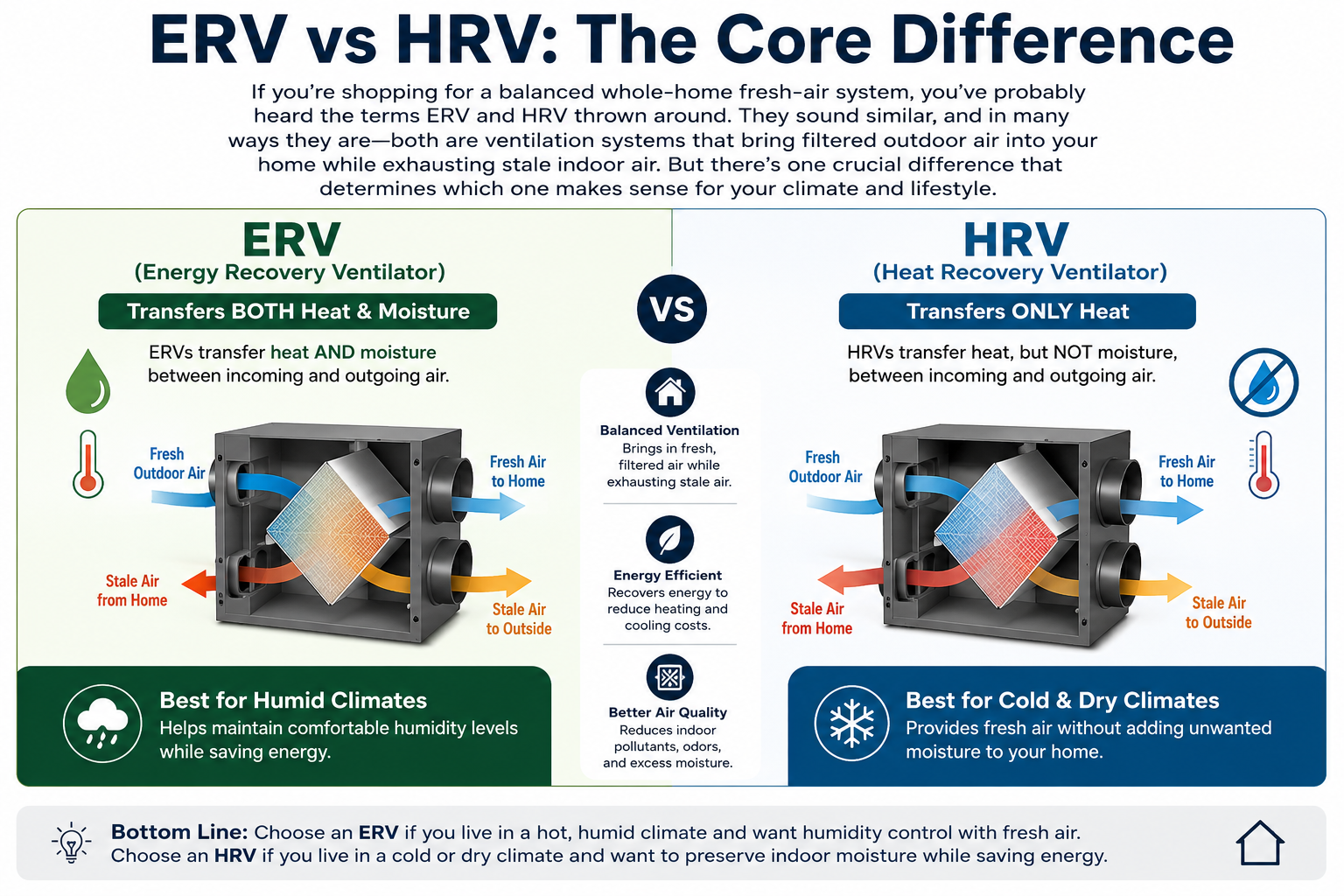
ERV vs. HRV: What's the Difference?
Looking for a balanced whole-home fresh-air system? You've probably come across two options: ERVs and HRVs. Both bring filtered outdoor air into your home while exhausting stale indoor air, but there's one important difference!
Hi, I'm LuLu! Your fresh-air-loving lemur! Let's break down ERVs and HRVs so you can find the right ventilation system for your home. 🌹
HRVs (Heat Recovery Ventilators) transfer heat between incoming and outgoing air. ERVs (Energy Recovery Ventilators) transfer both heat and moisture, helping moderate indoor humidity.
How Does an HRV Work?
An HRV recovers heat from outgoing indoor air and transfers it to incoming outdoor air. During winter, this helps warm incoming fresh air. In summer, it can help cool incoming air using the cooler exhaust air.
HRVs are particularly useful in cold climates and homes where excess indoor moisture needs to be removed through ventilation.
- Best for: Cold climates and homes needing greater moisture removal.
- Key benefit: Heat recovery without transferring moisture between airstreams.
- Consideration: Can contribute to dry indoor air during winter.
How Does an ERV Work?
An ERV takes things one step further! Along with recovering heat, it transfers some moisture between incoming and outgoing air.
During humid summers, an ERV can reduce the moisture entering with outdoor air. In dry winters, it can retain some indoor moisture that would otherwise be exhausted.
Fresh air with less temperature and humidity disruption? Now THAT'S smart ventilation!
- Best for: Humid or mixed climates, and homes where moisture retention is beneficial.
- Key benefit: Heat and moisture recovery for improved ventilation comfort.
- Consideration: Does not replace dedicated humidification or dehumidification.
Which System Is Right for Your Climate?
Climate and indoor humidity needs play important roles in choosing between ERV and HRV systems.
- Cold, Dry Climates: HRVs can work well, but ERVs may be preferable when retaining indoor moisture is important.
- Hot, Humid Climates: ERVs can reduce the moisture load introduced by outdoor ventilation air.
- Mixed Climates: ERVs often provide a useful balance of heat and moisture recovery throughout the year.
LuLu's tip: Don't choose based on climate alone! Your home's airtightness, indoor humidity, ventilation requirements, and equipment performance also matter.
Energy Efficiency and Maintenance
Both ERVs and HRVs recover energy from outgoing air, reducing the heating and cooling demands associated with fresh-air ventilation.
Actual efficiency depends on the equipment, airflow, climate, and operating conditions. Neither system is automatically more efficient in every situation.
Both also require regular filter changes, core maintenance, and airflow checks. Keeping your system clean helps maintain efficient operation and consistent fresh-air delivery.
Fresh-Air Ventilation for Your Home
Whether you choose an ERV or HRV, the goal is the same: continuous, balanced fresh air without unnecessary energy waste!
UpgradeAirKit offers complete fresh-air ventilation kits featuring LifeBreath equipment and Zehnder distribution components, including manifolds, ducting, and registers.
Explore our ventilation comparison guide, review our CFM sizing table, or learn how balanced ventilation works.
Not sure where to start? Try our Free System Match tool!
Frequently Asked Questions
Can I use an HRV in a humid climate?
Yes, but an HRV doesn't recover moisture. In humid climates, an ERV may help reduce the additional moisture entering with outdoor ventilation air. Your cooling and dehumidification systems still play important roles.
Will an ERV dry out my home in winter?
An ERV generally retains more indoor moisture than an HRV, helping reduce wintertime drying. However, it doesn't guarantee a specific indoor humidity level.
How much does an ERV or HRV system cost?
UpgradeAirKit complete ventilation kits have been listed from approximately $5,460 to $9,115, depending on system size and port count. Distribution-only kits have started around $1,920. Installation is separate, and current pricing should be confirmed in our online catalog.
Which is better for bedrooms?
Both systems can provide continuous filtered fresh air to bedrooms when properly designed and balanced. The most important factors are adequate airflow, quiet operation, and appropriate distribution to each room.
Does an ERV work in cold climates?
Absolutely! ERVs can recover heat while retaining some indoor moisture during cold weather. In very cold climates, choose equipment with an appropriate frost-protection or defrost strategy.
Fresh Air, Made Simple!
HRVs recover heat. ERVs recover heat AND moisture. Both help deliver balanced fresh air while reducing ventilation-related energy losses.
The best choice is the one that fits your home, climate, and comfort needs!
Ready to get started? Explore the LifeBreath 8-Port ERV Kit or our Zehnder ComfoWell Distribution Kit.
Build tight. Ventilate right. And keep that fresh air flowing! 🌹
Authored by LuLu & the UpgradeAirKit Team